Navigating End-of-Life Care: Understanding Patient Realities, Attitudes and Goal Attainment (Karen Kwa)
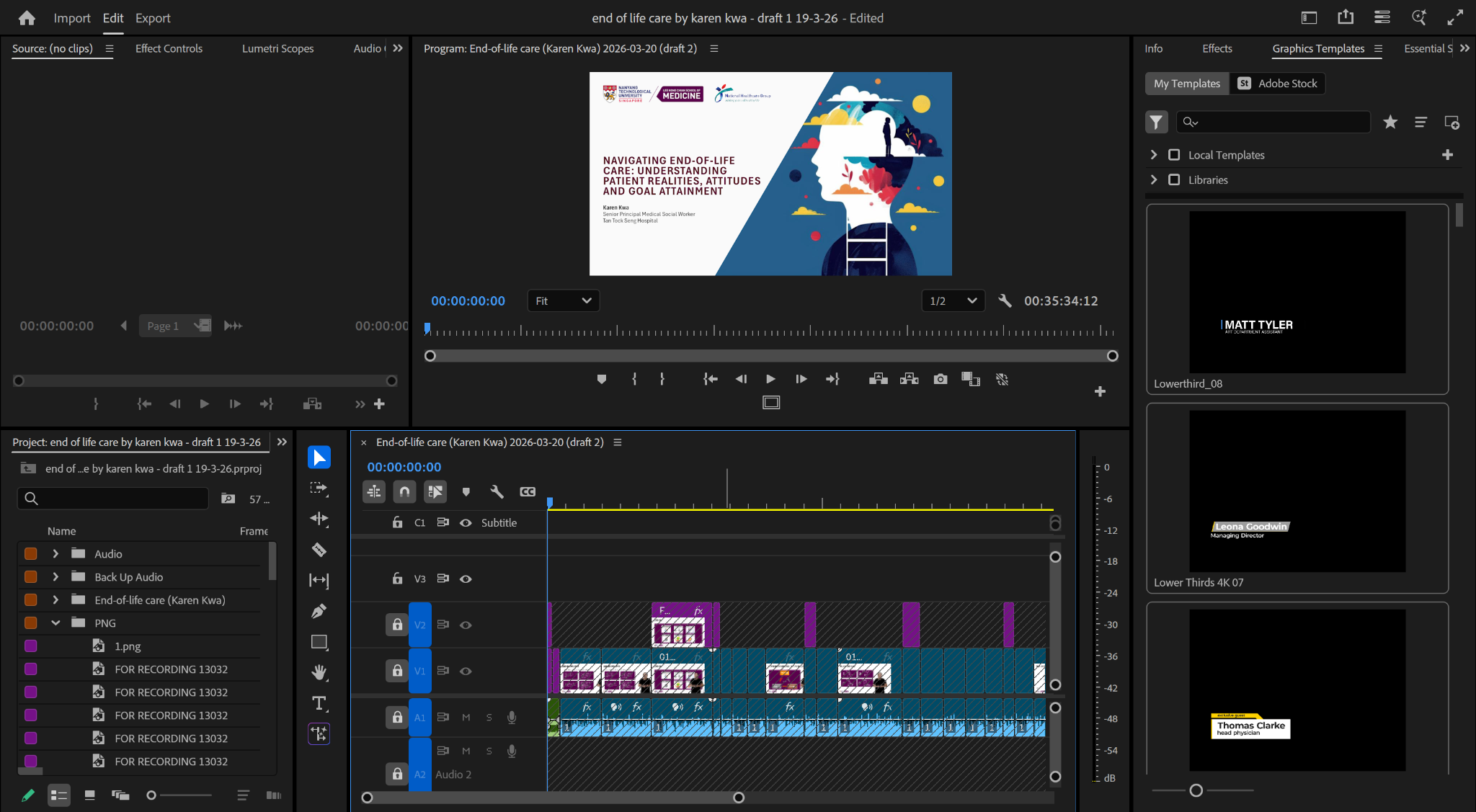
Key Roles & Responsibility:
- Edited educational lecture videos using Adobe Premiere Pro.
-
Trimmed footage and synchronized slides with lecture content.
-
Refined pacing, subtitles, and overall visual flow.
-
Performed quality checks to ensure clarity and consistency.
-
Incorporated supervisor feedback and revised video edits.
-
Managed post-production tasks while meeting project deadlines.
-
Produced professional educational content for healthcare learning.
- Maintained high attention to detail throughout the editing process.
LEARNING JOURNEY:
During my internship at, I was assigned to edit an educational lecture video featuring on navigating end-of-life care, understanding patient realities, attitudes, and goal attainment for medical students. This project was part of the school’s digital learning materials designed to support healthcare education through professionally edited lecture content.
My role involved handling the post-production editing process using, which included trimming footage, synchronising slides, refining pacing and ensuring the overall presentation remained visually clear and engaging for viewers. Throughout the editing process, I learned the importance of maintaining consistency and professionalism, especially when working with educational healthcare content intended for student learning.
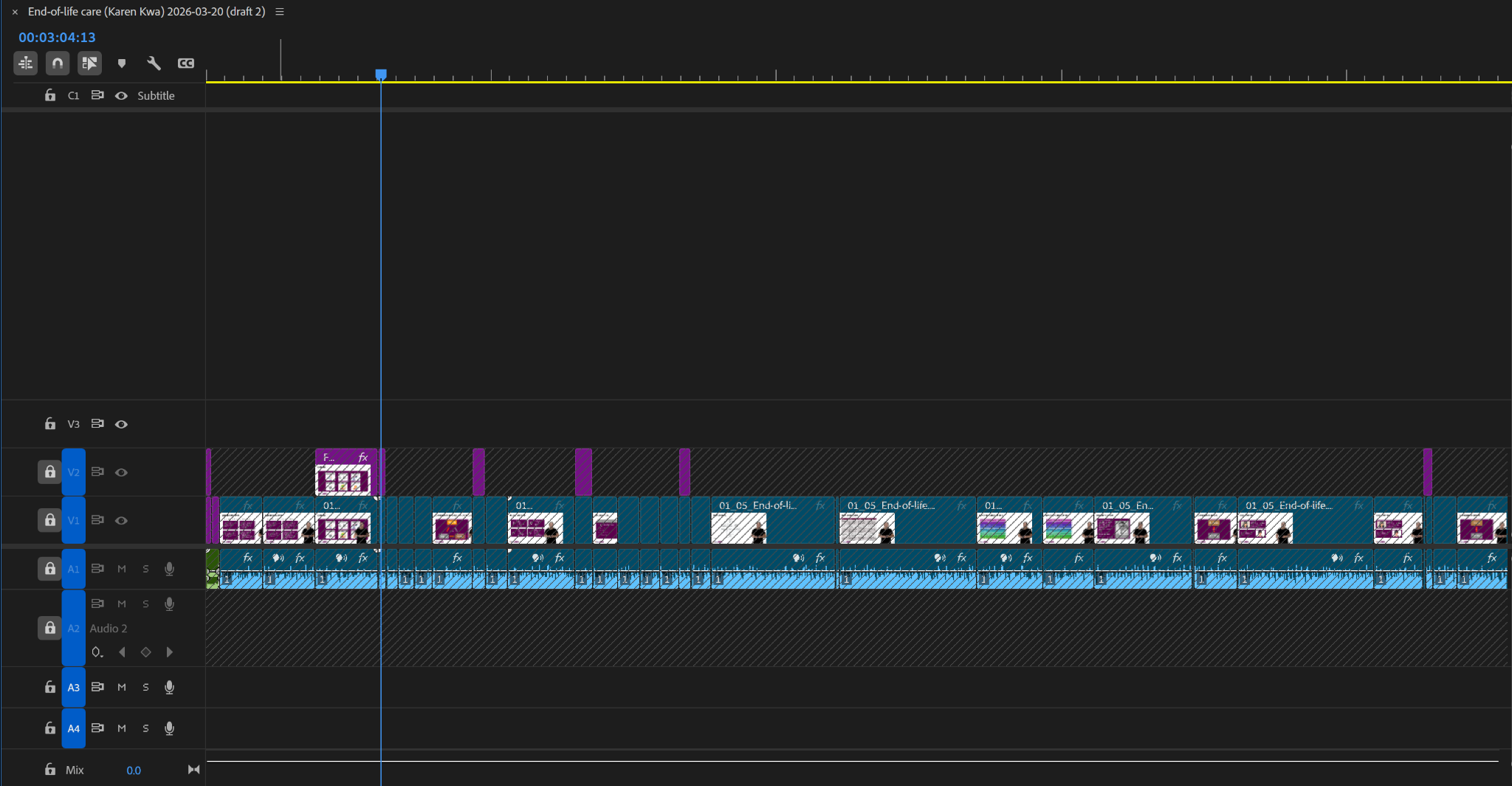
While working on the project, I also gained exposure to topics surrounding patient care, communication, and end-of-life realities within healthcare settings. Although my main responsibility focused on editing the lecture video, the content gave me better insight into how medical students are taught to understand patients’ emotional experiences, healthcare attitudes, and personal goals during difficult stages of care. This made the editing experience more meaningful and allowed me to better appreciate the importance of educational media in supporting medical learning.
During the project, I continued refining the edits based on supervisor feedback and made improvements to subtitles, pacing, and visual flow to create a smoother viewing experience. I also learned the importance of paying close attention to detail, as even small editing mistakes could affect the clarity and professionalism of the final educational material. Through this experience, I became more confident in handling longer-form lecture videos and adapting my edits according to professional expectations and deadlines.
Overall, this project strengthened my technical editing abilities, time management skills, and understanding of professional educational content production. It also encouraged me to become more proactive, adaptable, and detail-oriented while working in a healthcare education environment.
Post a comment